Seoul Searching and Seoul Plates Diaries: Part Three
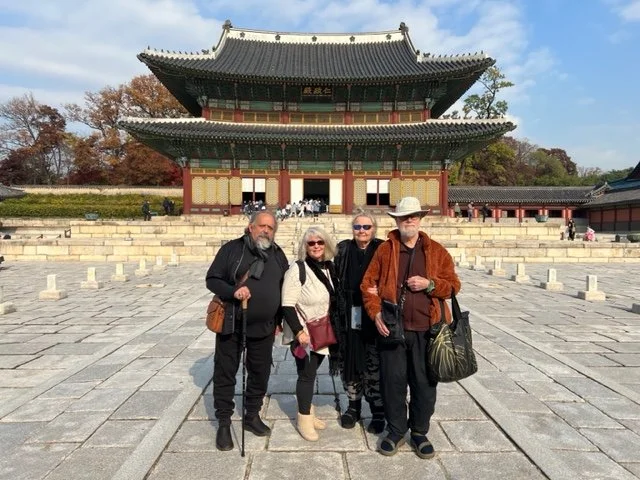
Changdeokgung Palace
On our sixth day in Seoul, we hired a guide, Mr. Ahn Ji-hoon, who picked us up at our hotel at 9:30 AM. For the next nine hours, we easily experienced Seoul. It was a very long day, but it was worth it. However, if I’m able to do it again, if possible, I would arrange five hours for one day and the other half for the following day.
That day, we again crossed over the Han River and one hour later arrived at Changdeokgung Palace, one of the” Five Grand Palaces” built during the Joseon era (1392 to 1897). It is located within a large park in the Jungno district.
Crossing the Han River
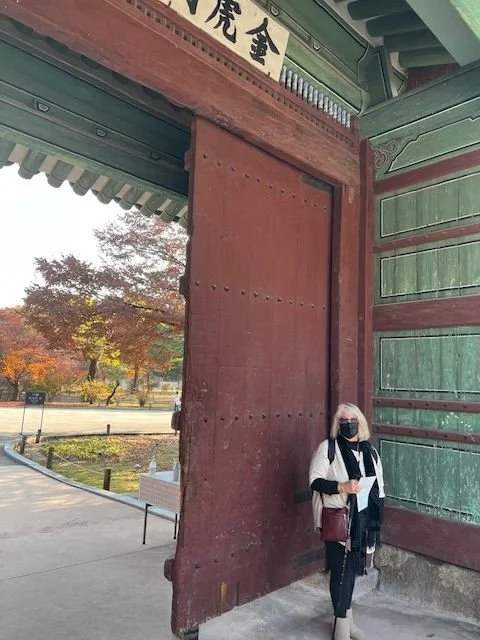
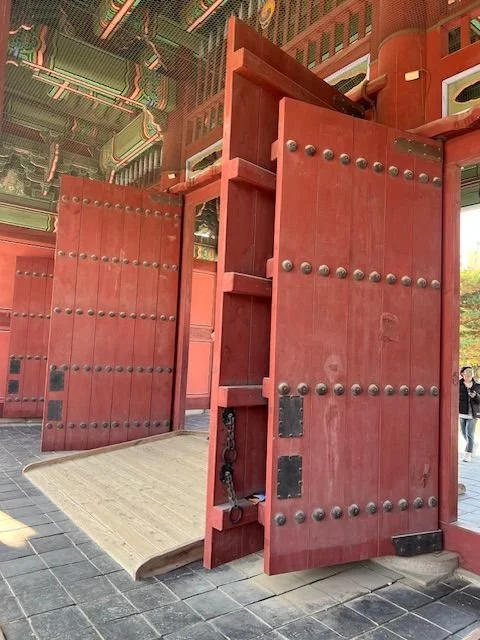
Goosebumps covered my body as I stood at the massive gates. These gates have stood for 620 years. King Taejong, the third monarch of the Joseon Dynasty, began construction of this palace in 1404, and the first phase was completed in 1405.
My imagination was on fire thinking about how many important Kings and Queens had passed through them. This palace was the favorite of many Joseon Kings and retained elements that date back to the Three Kingdoms of Korea period (18 BC to 660 AD). One element is that the buildings of Changdeokgung blend seamlessly with the natural environment, rather than overpowering it. If you are a fan of Frank Lloyd Wright, you will also find that he followed this concept.
Fires and foes have damaged and destroyed portions of the palace throughout history. Everyone is fortunate that the Koreans take great pride in their history and have restored as much of it as possible.
Earlier, I mentioned that I am an avid fan of Korean historical K dramas. A replica of this palace has been used numerous times. The film industry is not allowed to film here. Still, you can visit the Mungyeongsaejae Open Set in Gyeongsangbuk-do, which is primarily known as a shooting location for numerous historical dramas.
Walking through the grounds, I envisioned the kings, queens, and their servants who lived their lives here. Living through these times most likely wouldn’t have been that wonderful unless you were a noble or royal. However, throughout history, some kings and queens feared for their lives daily. If only the walls could talk.
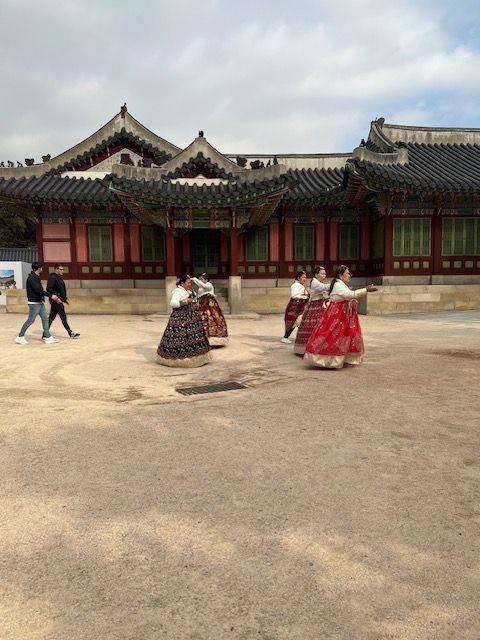
I’m not the only one who envisions living during that time. The Koreans love to dress in their ancestors’ attire. While touring the palace, many tourists and residents rent clothing from rental companies nearby and dress as their former queens and kings. If you dress up, the palace’s entrance fee is waived.
When we visited the city of Jeonju, we went to Jeonju Hanok Village, where everyone was in costume. It was so much fun. I will include this later.
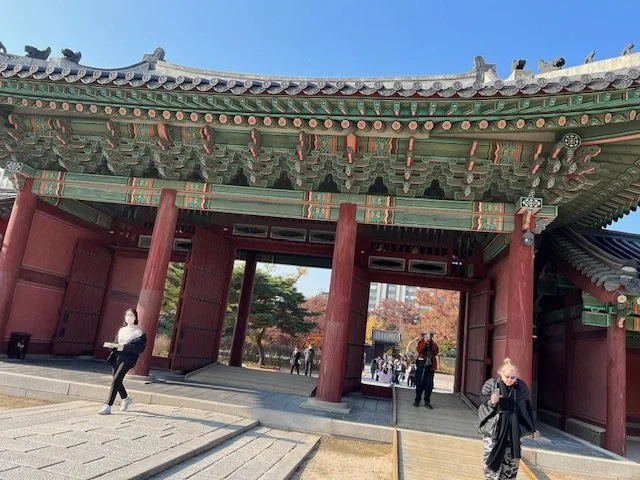
As we wandered in and out of Changdeokgung Palace and temples, we wondered why they were so colorful. They reminded us of the colors the Tibetans use. We were curious whether they were influenced by the Tibetan or vice versa. After research, I found that it is related to the Korean word “dancheong.” This word symbolizes the five-color design, which translates directly as red and green, and dates back to prehistoric times, when it was popular to adorn tomb walls during the Three Kingdoms of Korea era (57 BC through 668 AD). Over time, dancheong spread from burial tombs to buildings of importance and the importance of their occupants.
All dancheong designs relate to the five-element theory in their own way. In Tibet, the colors blue, white, red, green, and yellow are related to Tibetan Buddhism.
In Korea, black is also used, and the colors have different meanings. Of course, Buddhism plays a part, which is the common thread.
Red symbolizes the south, birds, summer, and fire. Blue represents the east, the dragon, and the element of wood. White represents the west, tiger, fall, and gold. Black symbolizes the north, hyeonmu, winter, and water. Yellow represents the center, periods between seasons, and the Earth. It is a perfect example of the Koreans' desire for stability and peace in the present life while moving toward a rewarding afterlife.
The artistry and complexity of their roof designs required great skill. Each color has its designated painter throughout the entire project.
Common symbols in dancheong include three circles representing heaven, earth, and the moon.
The fish symbol on the main Buddha table represents the effort and determination required for attaining eternal enlightenment.
The Swastika is an ancient symbol of peace, harmony, and good luck. (Adolf Hitler stole this symbol and used it to represent the Nazi Party.)
The Lotus symbolizes rising above adversity and achieving spiritual clarity, much as the flower blooms beautifully from muddy waters.
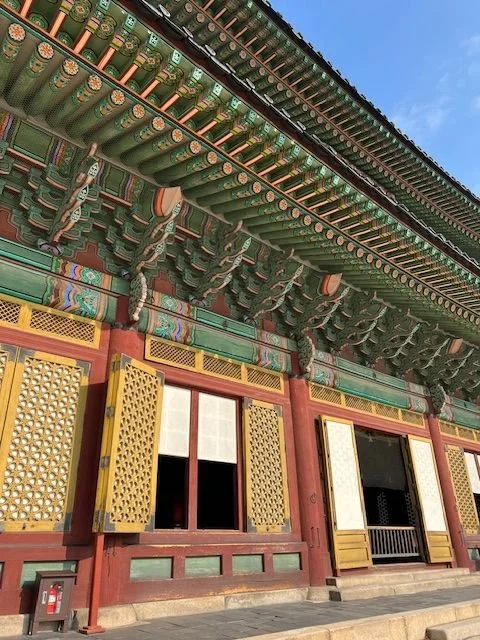
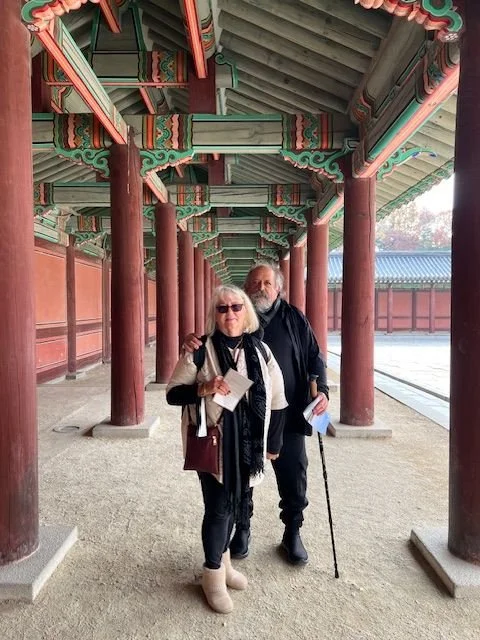
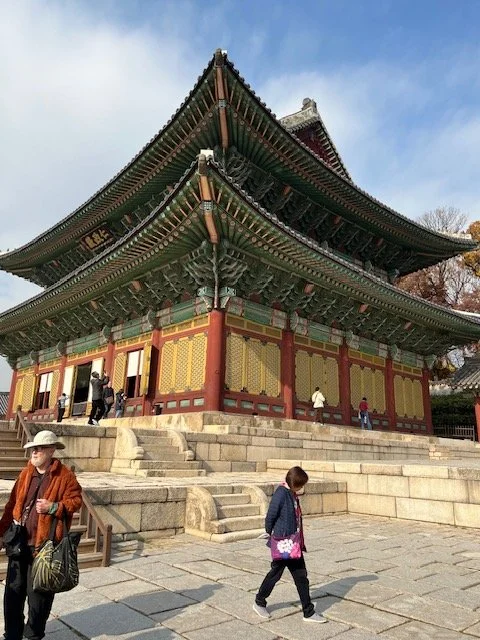
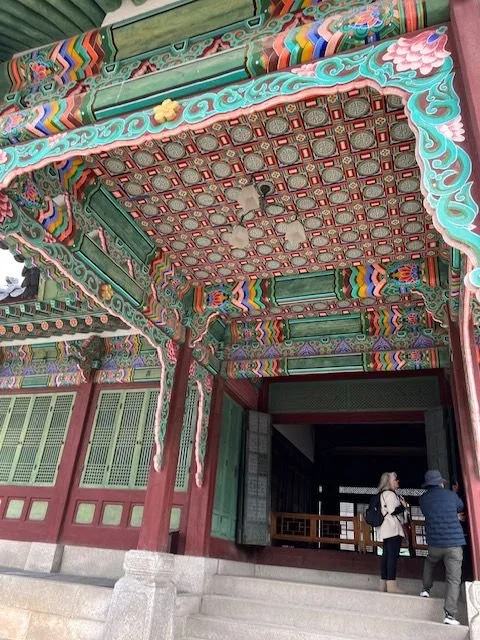
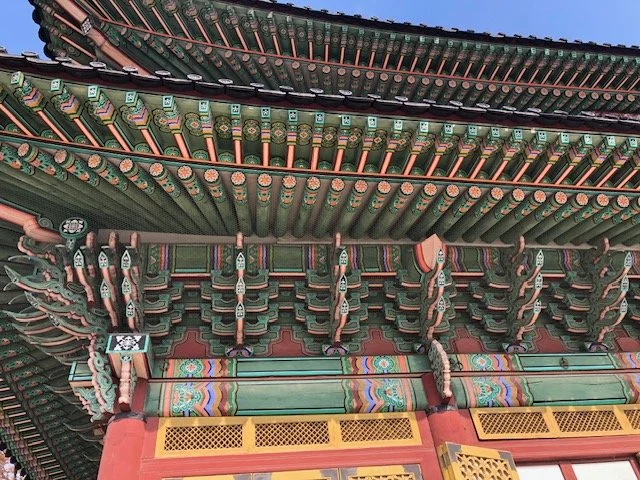
I also wondered why all the outside columns were red. The location determines the color, so exterior walls and pillars that receive sunlight are traditionally painted red.
As we toured, we weren’t allowed to enter the palace. Instead, we stood at the door or windows to take pictures. The first things I noticed were the curtains and the light fixtures.
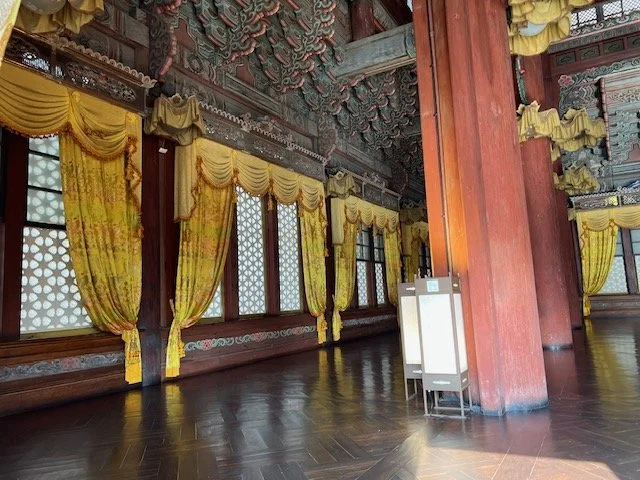
Of course, when I watched Korean historicals, most of them took place before electricity or fancy curtains were available. I discovered that the last king to occupy this palace was King Sunjong, the final emperor of the Joseon Dynasty. He lived there until he died in 1926. The last royal family member to reside there was Crown Princess Bangja, who passed away in 1989. The palace was added to the UNESCO World Heritage List in 1997.
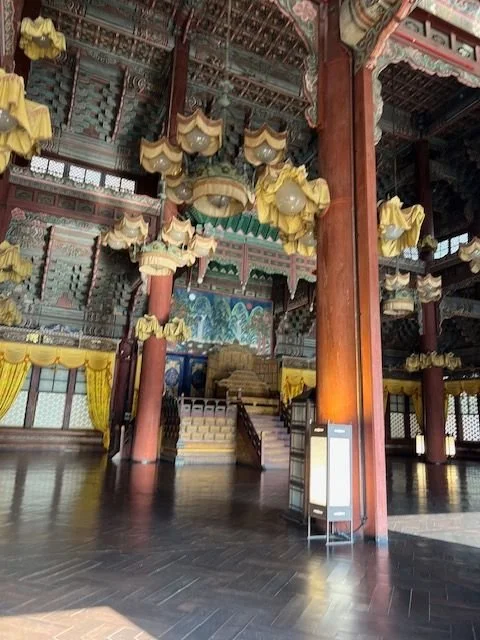
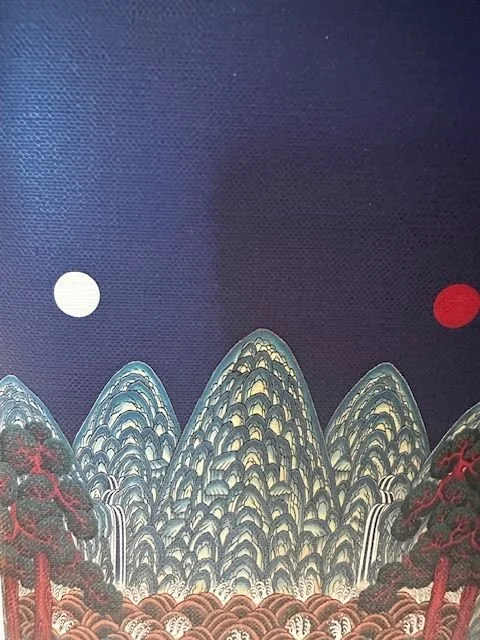
The throne hall was called the Injeongjeon. The king sat upon the Eojwa or his Phoenix throne, which is higher than anyone else. Whenever I watched a drama, a painted screen sat behind the king. I often wondered what it meant. The folding four-panel screen is called Irworobongdo. It depicts a stylized landscape displaying a sun, a moon, and five mountain peaks. The sun, often red, represents the king as the yang, and the moon, usually white, represents the yin, the queen. The five peaks are interpreted as the Five Sacred Mountains in Korea, a mythical place of natural beauty and power. It represents a highly symbolic image of the King’s authority and the universe's balance. It is buried with the king when he dies. It’s said the painting is only complete when the king is seated before it.
However, as I said earlier, the five colors represent the building's importance and the importance of its occupants. After we wandered the grounds, our guide informed us that we were entering the queen's quarters. As you can see, women were not regarded as important. However, their quarters were more beautiful and had beautiful gardens.
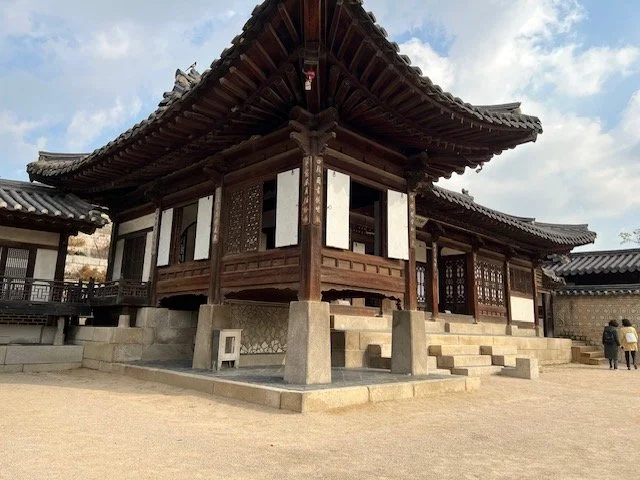
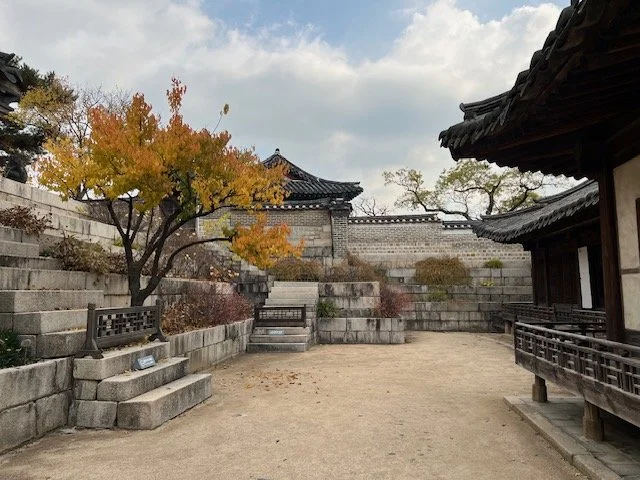
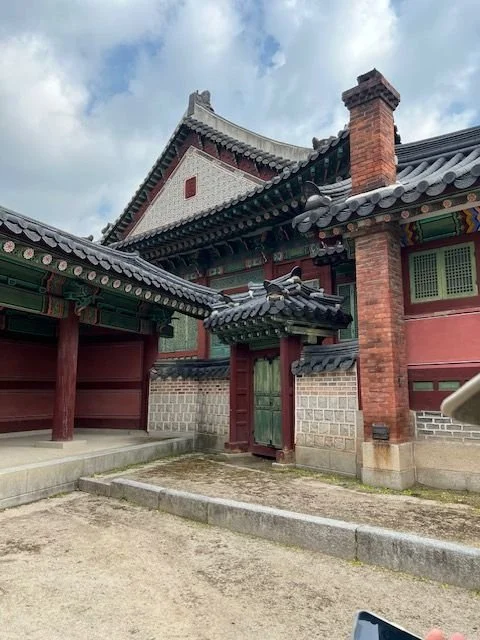
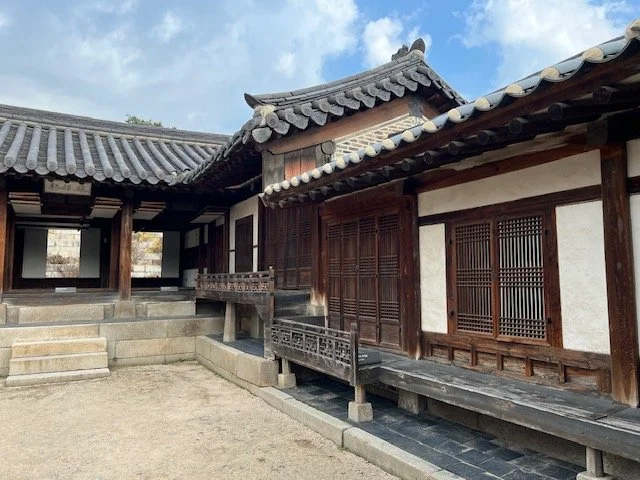
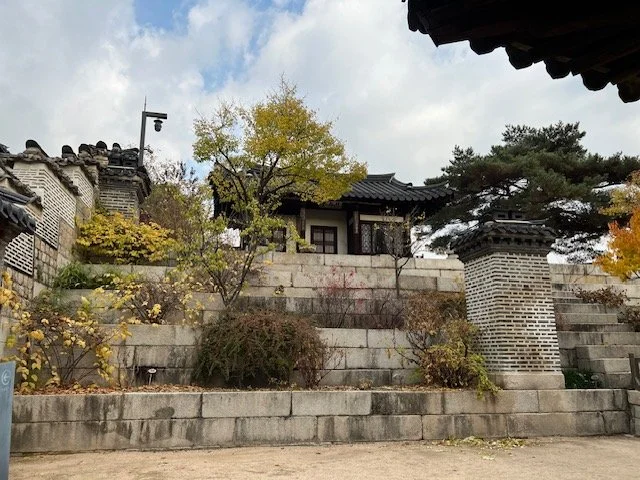
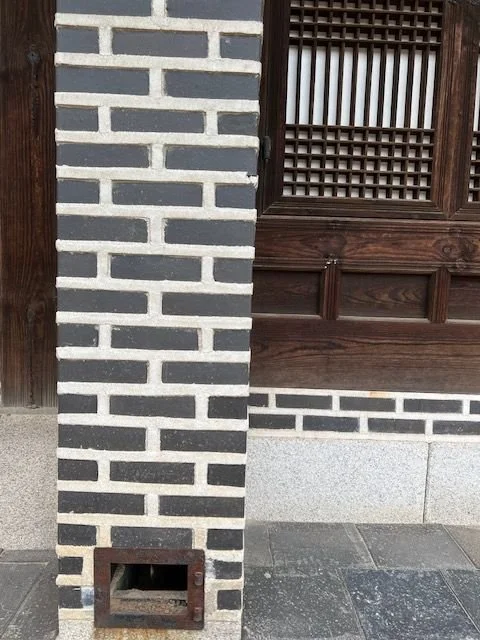
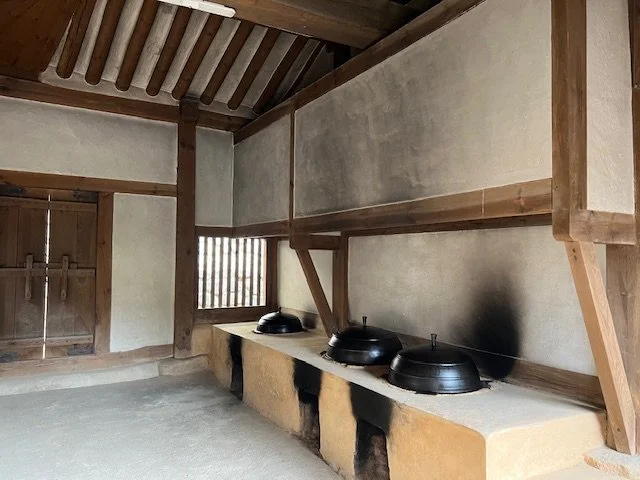
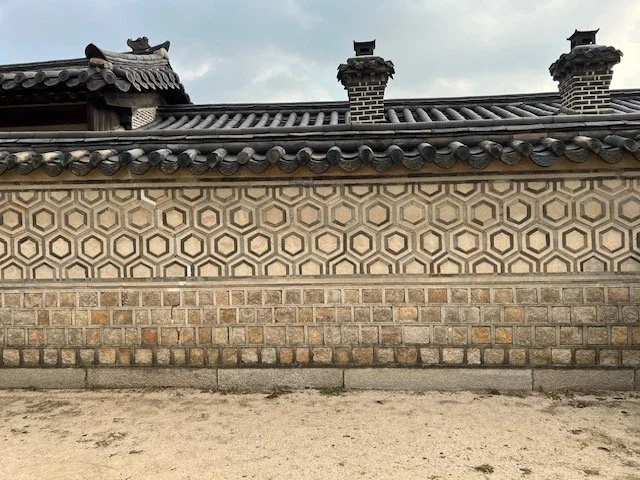
As we walked around the palace, we observed the brick chimneys outside. We questioned our guide, and he explained they were part of the ondol. Ondol? He explained it is an ingenious traditional heating system of Korea, believed to have originated about 2500 years ago in an ancient Korean state called Bukokjeo. It was located in Manchuria and the Russian Maritime Province of Siberia, later taken over by the Goguryeo kingdom (37 BC 668 AD) of Korea. This kingdom inherited this incredible system and continues to use it today. Of course, updated.
The modern ondol system typically involves hot-water pipes embedded in the floor, connected to a boiler. Every hotel we stayed in had wonderful, warm floors. However, during the Joseon period, when the ondol became very popular, it consisted of a fire furnace called an agungi, which also served as the cooking station.
The heat and smoke would move through channels of wide stones beneath the rooms' foundations, warming the floors. The smoke would rise and be released in the stone chimneys outside the house. Even after the fires had gone out, the heated stones continued to radiate warmth. This method altered the lives of Koreans.
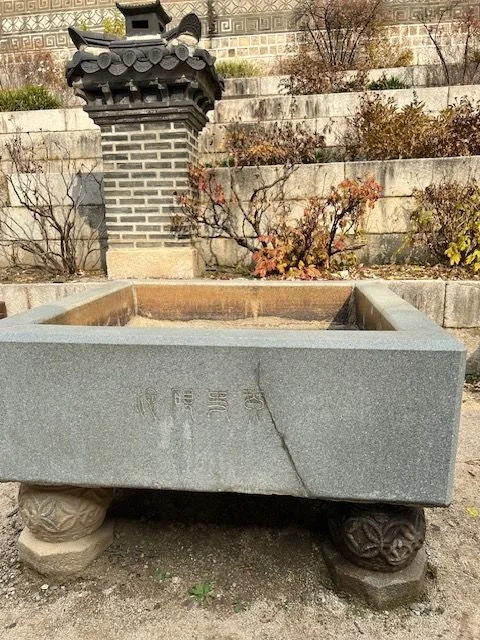
If you have ever wondered why they sit, eat, and sleep on the floor, it is because of their ingenious heating system, which creates cozy, warm floors that help them survive the cold winters. However, the downfall of this early system was the need for firewood, and historical records state that most mountains were bare by the end of the Joseon Dynasty. Another curse was fires. The large granite vessel pictured contained water in case of fire.
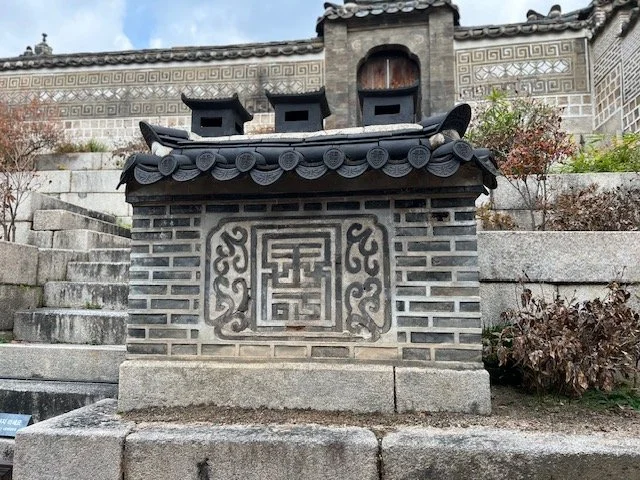
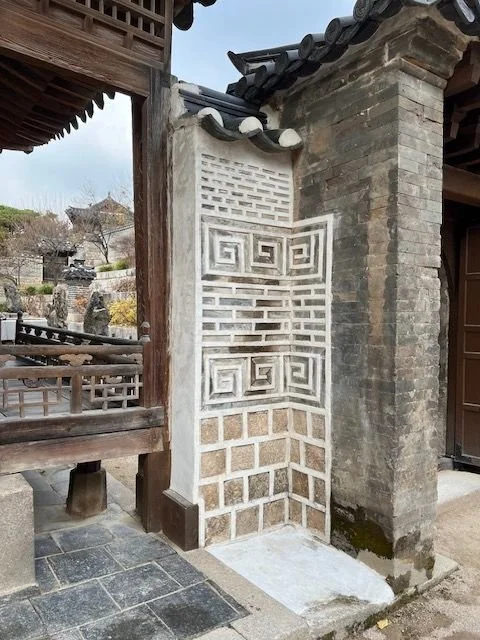
On my trip, I became fascinated by the beautiful brick and stone walls built in the palaces, tombs, temples, and hanoks, the traditional homes of the past throughout South Korea. The history of brick masonry dates back as early as the Three Kingdoms Period (57 BC-668 AD), with increased advancement in the Goryeo and Baekje kingdoms. They were primarily used in tomb construction, defensive walls, and early Buddhist temples.
The use of red and black bricks in ancient Korea had both practical and symbolic purposes. The durable, striking red bricks were produced by firing iron-rich clay at high temperatures. The reddish hue is due to oxidation. However, the black bricks, my favorite, were created in reduced-oxygen kilns, which gave them their darker tone. These black bricks were often used in tombs and religious sites to signify solemnity, reverence, or death. The dual use of colors carried meaning in Buddhist tradition: red represented life transformation, and black symbolized the unknown.
Skilled artisans were responsible for these intricate brick designs, temples, and defensive walls. They were often organized into hereditary guilds or sponsored by noble families and royal patronage. The Mireuksa Temple in Iksan, founded in 602 AD by King Mu, featured wooden and brick elements, including a massive pagoda whose remains suggest that master masons were brought in from China to train the Korean craftsmen. By the Unified Silla period (668-935), many Korean artisans studied methods of brick firing, kiln building, and masonry from the Tang Dynasty.
Brick kilns themselves were often operated by specific families or village units, who passed down the secrets of clay mixing, drying, and firing over generations. Their craftsmanship extended not just to bricks but also to roof tiles, statues, and ceramic inscriptions. They might have been influenced by the Chinese, but as always maintained their unique Korean style.
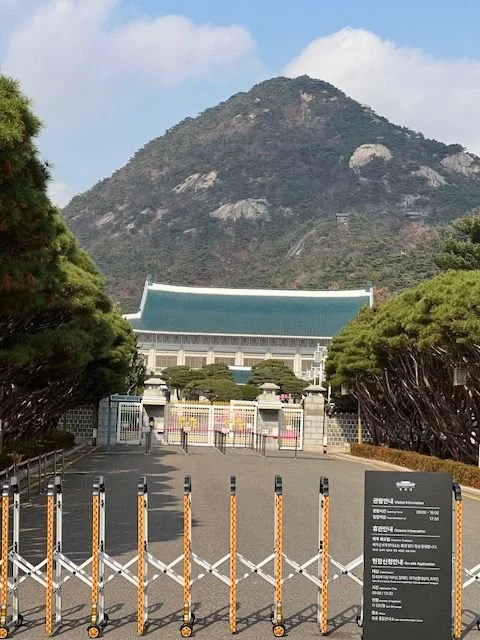
After we left the Palace, our guide took us to the Blue House, equivalent to our White House.
Now it's lunch time. See my next Seoul Plates Diaries blog, Samgye-tang, a Korean ginseng chicken soup.
Thank you for reading my Seoul Searching blog.