Seoul Searching and Seoul Plates Diaries: Part One
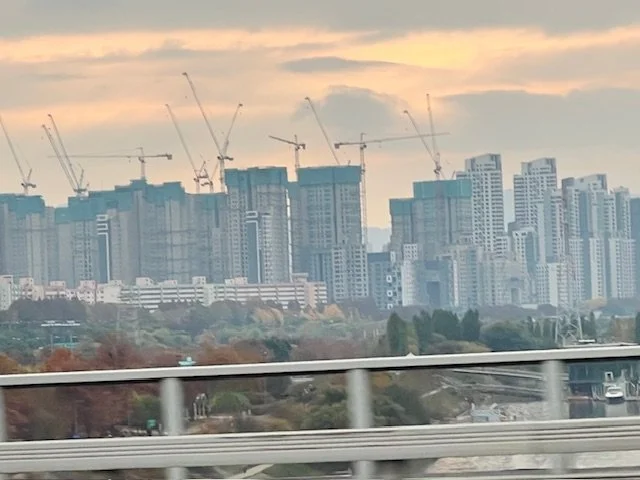
New Condos
South Korea is a country that has overcome wars, occupation, and economic crises while successfully maintaining its colorful culture. With an extreme work ethic in the last 50 years, it has become famous for its vibrant pop culture, particularly in K-pop and K-drama, technological advancements, cosmetics, and delicious food.
Population: 51,67 million
Land mass: 37,421 square miles, slightly smaller than Pennsylvania or Indiana
Geography: Primarily mountainous, with coastal plains.
On November 8, 2022, after carefully planning our five-week trip to South Korea, we flew to Honolulu and excitedly boarded Korean Air for a ten-hour flight to Seoul. We planned to stay nine days in Seoul, then pick up a rental car and circle the entire country.
As I have learned from my travels, careful planning doesn’t prepare you for everything. Unknowingly, we were the first influx of foreign travelers to arrive in South Korea after the COVID-19 travel ban. Like everyone else at that time, we were required to wear masks.
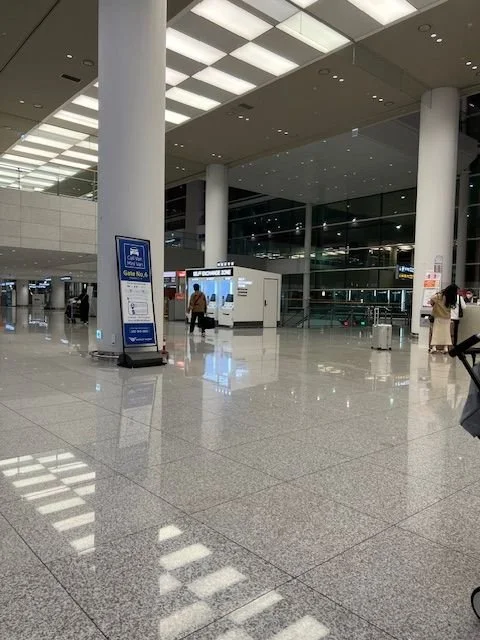
Seoul Airport
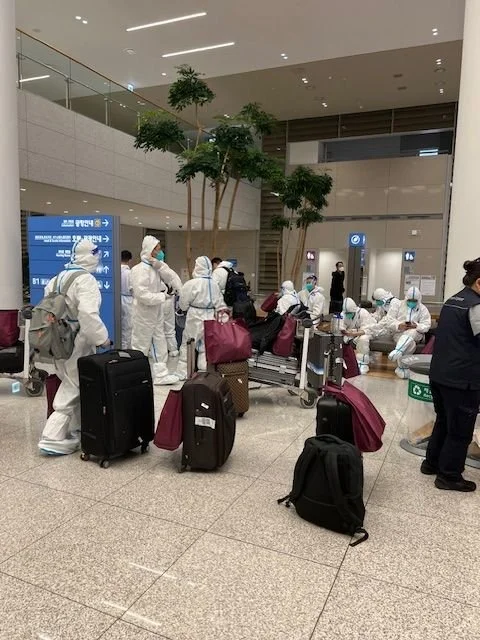
Also, we found out early on that our age and my white hair made us stand out. Our guide told us that Seoul is primarily populated by young working adults. And if you were older, you definitely dyed your hair. Don’t get me wrong, everyone was very polite and friendly. We just stood out. At the National Museum of Korea, we had our photos taken numerous times.
We found that most people didn’t speak English or were embarrassed to try, and all restaurant menus and street signs were in Korean (as they should be). It's just that none of the blogs I read included this.
In Thailand and the other countries we visited, their economies were based on tourism, but in Korea, that's not the case.
In Korea, you are quickly immersed in their culture, which made us laugh a lot, cause we did a lot of things wrong. Thank goodness I purchased a small hand translator, and later found that iPhones had apps that greatly helped.
We discovered several types of restaurants—ones with computerized boards written only in Korean. You place your order on the board and pick it up at the counter, like our first meal. This restaurant was next door to our hotel. After we checked in, we ventured out to eat, even though it was after 9 PM.
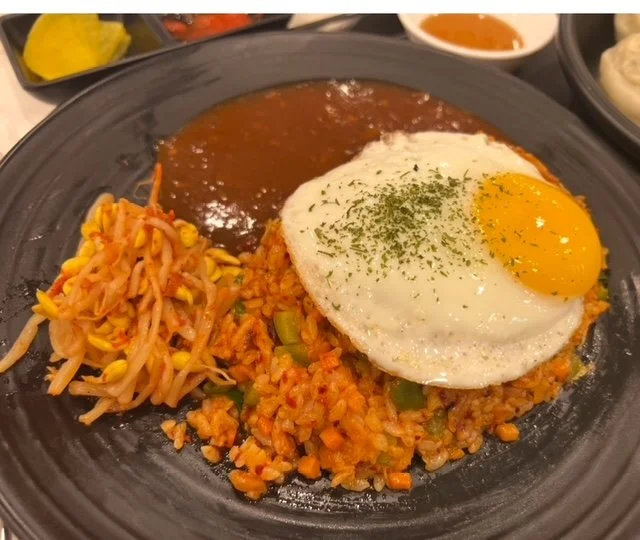
Kimchi Fried Rice
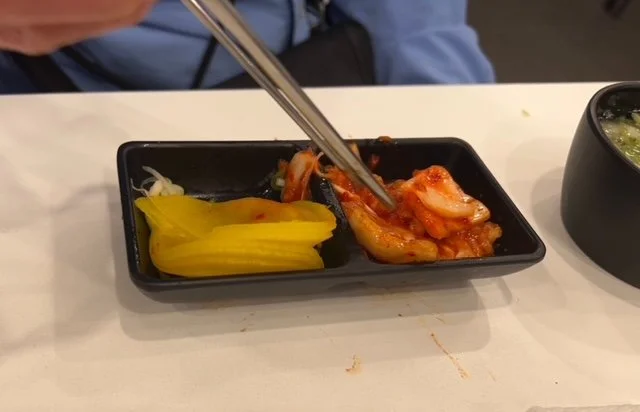
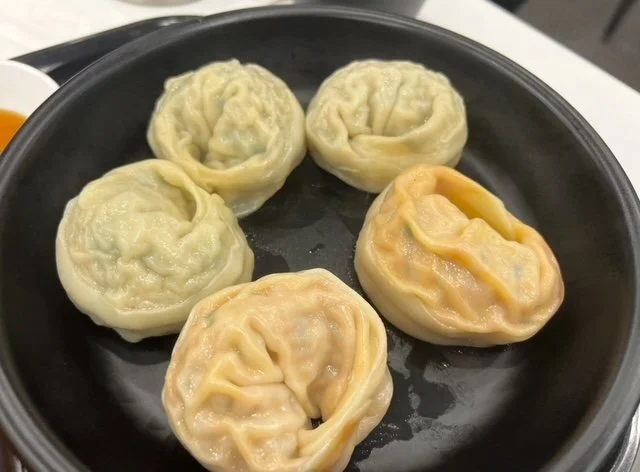
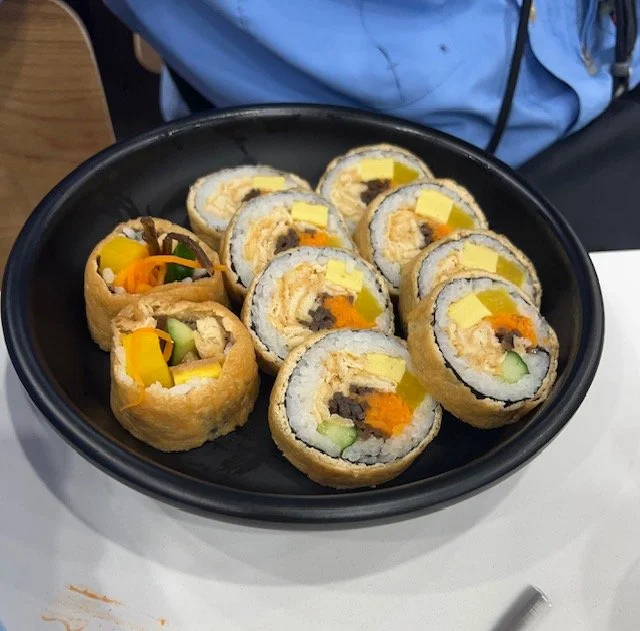
Then there are the old-fashioned restaurants (as they call themselves) and the super-advanced ones, where servers take your order and robots deliver your food. All restaurants typically offer free side dishes, known as banchan. Even the counter-order restaurants have an island with free kimchi and pickled radish.
Almost every restaurant has tables with a unique feature: a drawer at the end of each table that holds your utensils, chopsticks, a beer opener, scissors, and napkins. The spoons and forks have long handles because Koreans eat family-style and share food with their companions. The long handles make it easier to reach the food. This custom began during the Japanese occupation period, from 1910 to 1945.
The Korean chopsticks are also unique. They are the only people in the world who use metal chopsticks. This custom is believed to be as old as the Three Kingdoms Period (18BC to 660AD). During that time, wealthy and royal families used silver to detect poison in their food. If poison is present, the chopstick tips will turn black. The commoners used a similar version made with a cheaper metal.
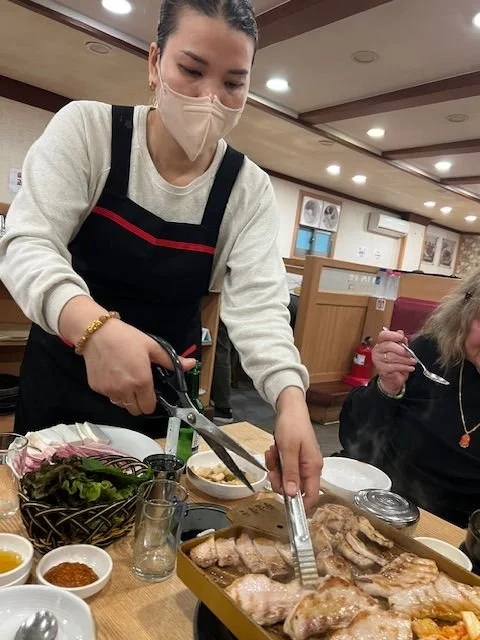
You might ask why scissors. They are used in many casual restaurants that serve BBQ and naengmyeon (noodles). The scissors are for servers or for you to cut your meat or noodles.
We loved the scissors, their silverware, and chopsticks so much that we purchased them and still use them today. Our family and friends sometimes grumble about the metal chopsticks as they are much harder to use.
Seoul is home to numerous neighborhoods, each offering a unique experience. We stayed in the Gangnam area at the O’Cloud Hotel. The rooms were nice, clean, and small, as were all the others around the country.
The other thing we loved was that their hotels had openable windows. Why was that important, you ask? We planned our trip for early fall to enjoy the beautiful fall colors and take advantage of off-season discounts. To help us prepare for packing, we read Korean travel blogs and weather websites. However, my son and his girlfriend surprised us with a last-minute wedding. The wedding delayed our trip by two weeks. We would arrive in Korea in late fall and return in mid-December. That meant the weather would be a lot colder. Our suitcases were overloaded with warm clothing. Just like I said, careful planning sometimes goes awry. They had an unusual heat spell. Their hotels had already turned on their heat, and we were unable to turn it off. Thank goodness for openable windows.
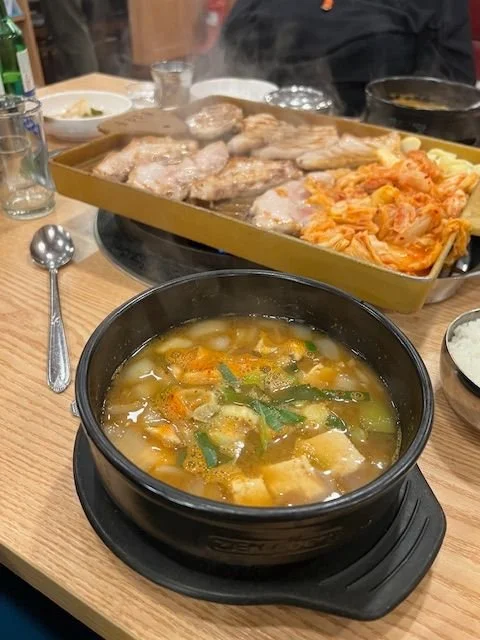
Several counter-service restaurants and classic, old-fashioned establishments were located near our hotel. The food was good at both, but we preferred the old-fashioned one. The food was outstanding and inexpensive, and lovely servers helped us out.
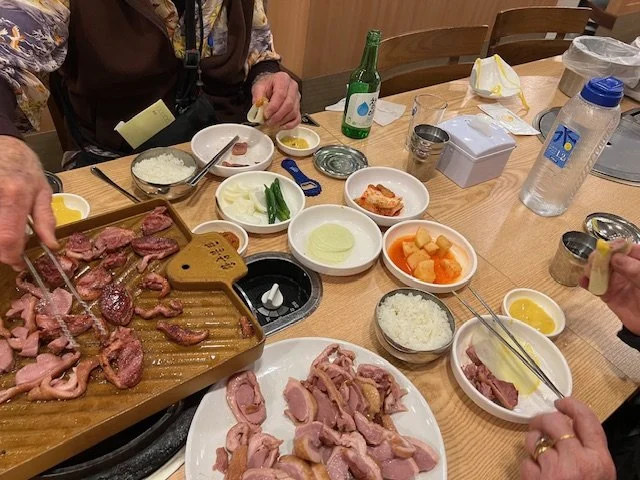
The first time we sat down, we began ordering various items. The waitress shook her head, pointed to the menu, and held up one finger. Not knowing exactly what she meant, we just nodded. We quickly learned that you ordered food by the set: for two, four, or six people. She set up our grill in the middle of the table, and the main dish came: smoked duck breast...and many side dishes. We couldn’t believe it. Later in our trip, we learned that banchans varied from province to province.
All delicious. Additionally, we learned that alcohol, such as soju and beer, is typically served with meals rather than before meals.
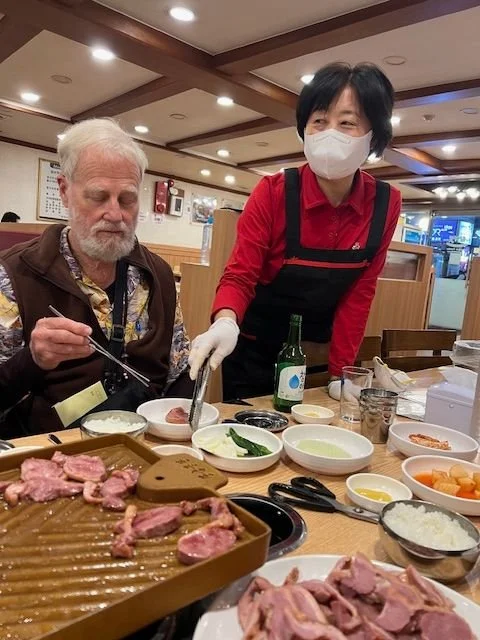
Another restaurant located at Seocho 4-dong, next to our hotel, was a seafood hot pot restaurant. I’m not sure of its name, but every night, the restaurant was filled. You can also order meat if you have a non-seafood eater.

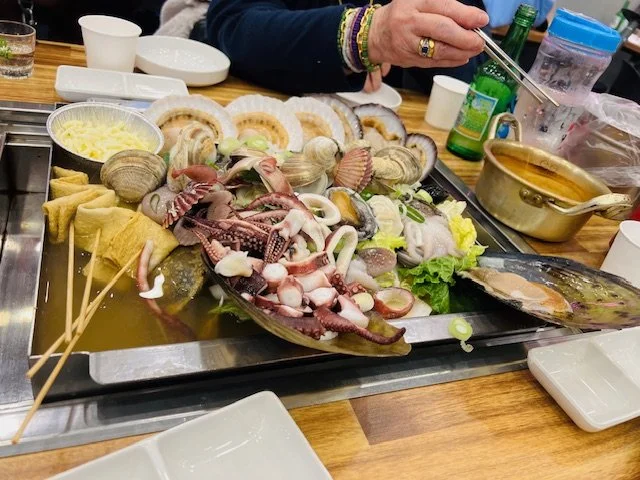
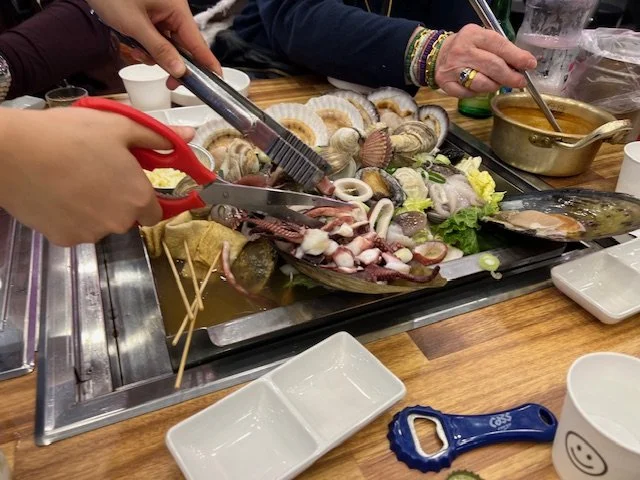
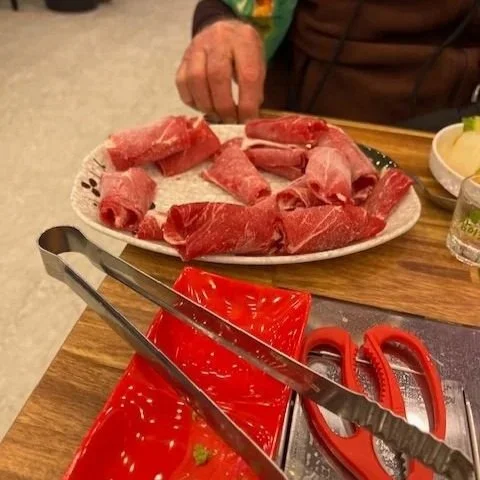
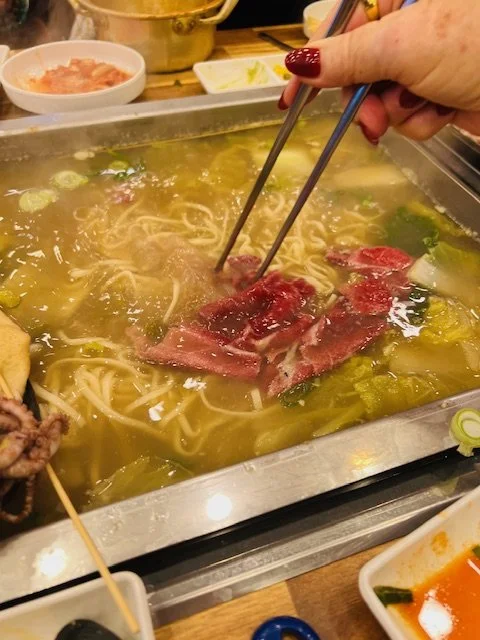
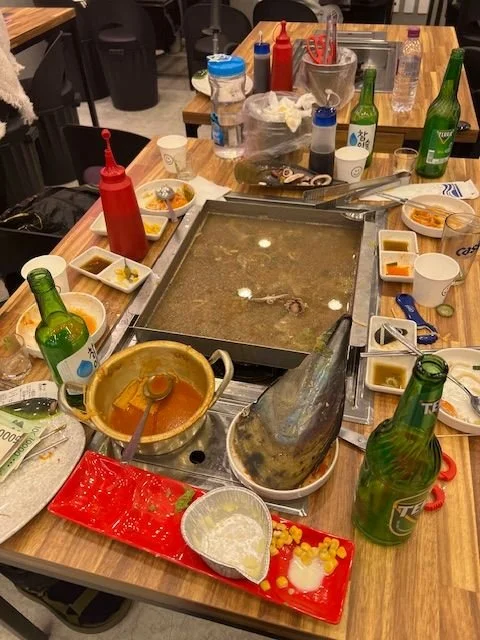
As you can see, we really enjoyed it.
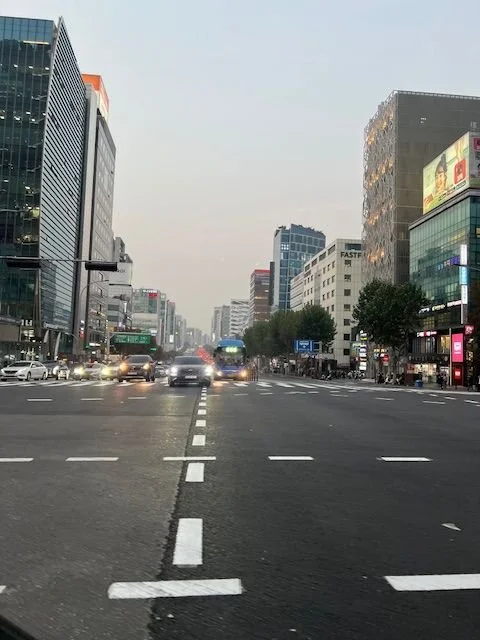
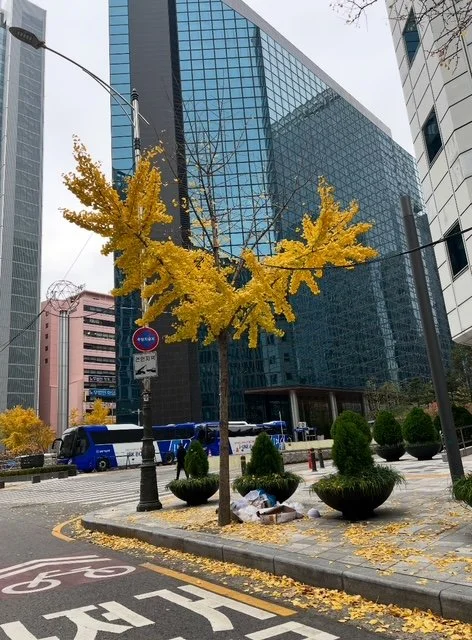
The Gangnam area, south of the Han River, is one of the newest neighborhoods. We stayed here because we had dental appointments. In Asia, dentistry is much less expensive and has excellent services. South Korea is also famous for its fantastic cosmetics and cosmetic surgery. I saw many women and men with black and blue swollen faces wearing sunglasses and bandages.
The area is booming with massive malls, new luxury high-rises, and young adults in great shape rushing to work, maneuvering the hilly landscape with ease. They found us to be way too slow. The entire city of Seoul is hilly, evoking San Francisco.
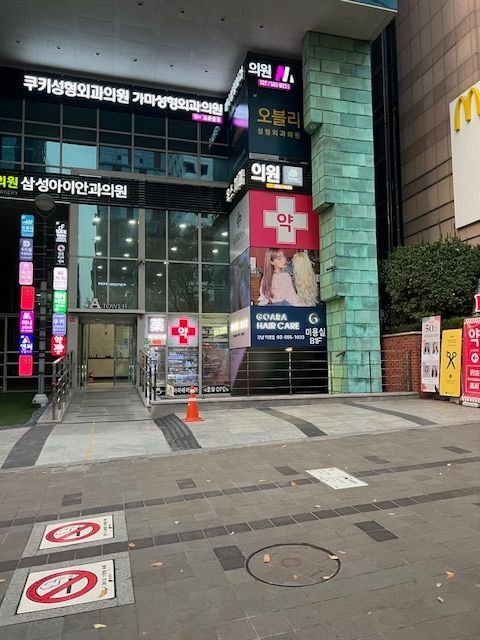
Dentist Office
After our dentist appointments, our next adventure was visiting the National Museum of Korea in Yongsan-gu. I call it an adventure because the Korean addresses are not written in the English format. The taxi driver got confused and took us to several places before we finally arrived at our destination. This would be my first recommendation: learn how to write their addresses. Even using Uber or Lift is hard without this. Of course, they offer great alternatives for those who are young or old and experienced with subways and buses.
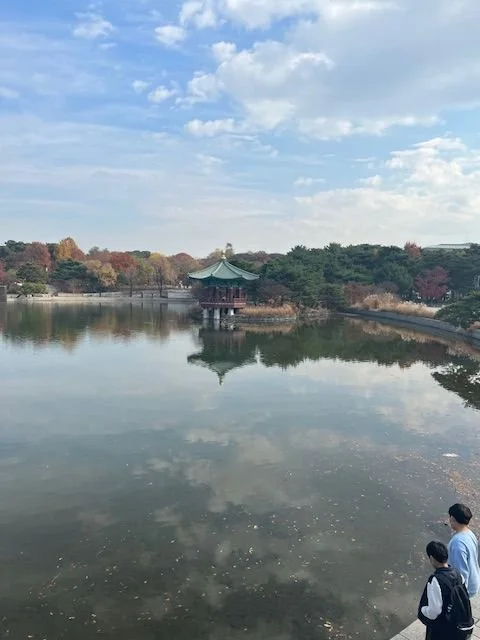
That being said, the National Museum is excellent. It’s a vast, beautiful architectural building surrounded by nature and a grand lake reflecting the fall colors. It takes you on a marvelous journey through Korea’s past, from prehistory to the Korean Empire (1897-1897). The museum is vast, so allow a lot of time. If you are short on time, the bottom floor will teach you plenty.
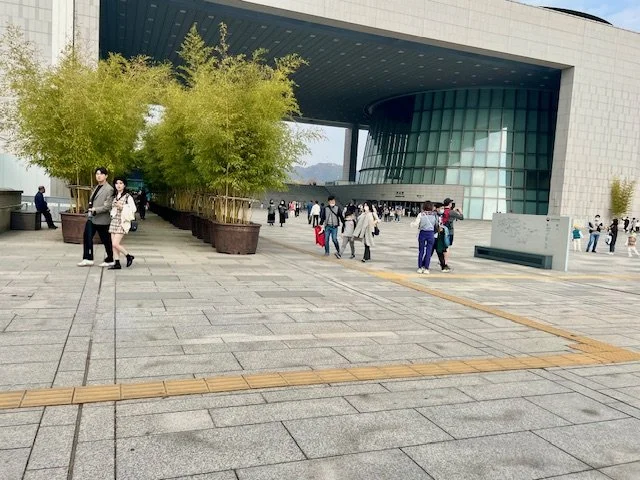
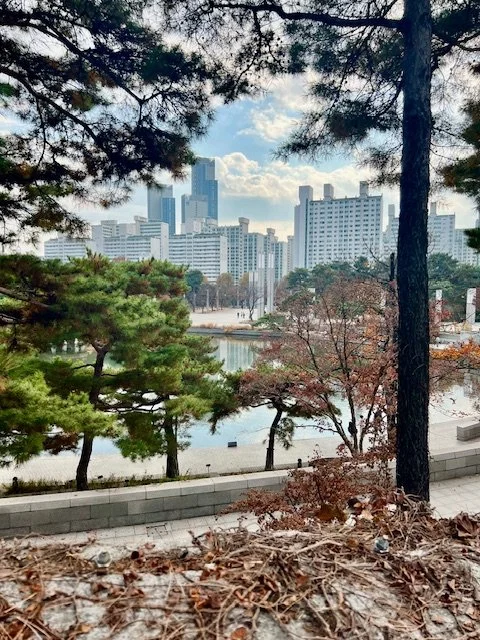
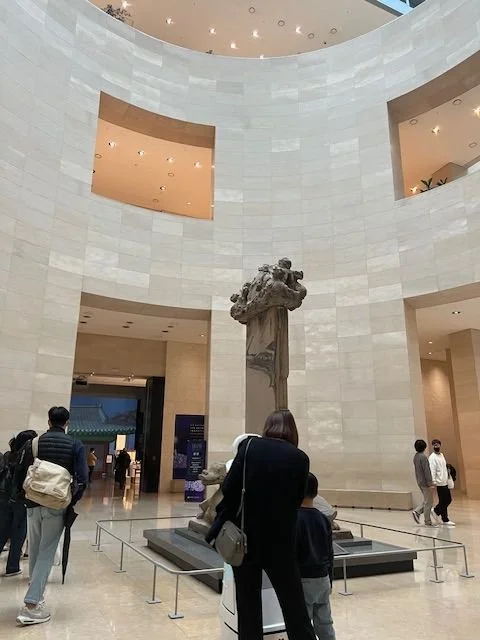
Other museums include the Leeum Samsung Museum of Art in Itaewon, the Korean Stone Art Museum, and the National Folk Museum of Korea in northern Seoul, among others throughout the city. That’s why I recommend a guidebook. That way, you can choose your own interests with the addresses.
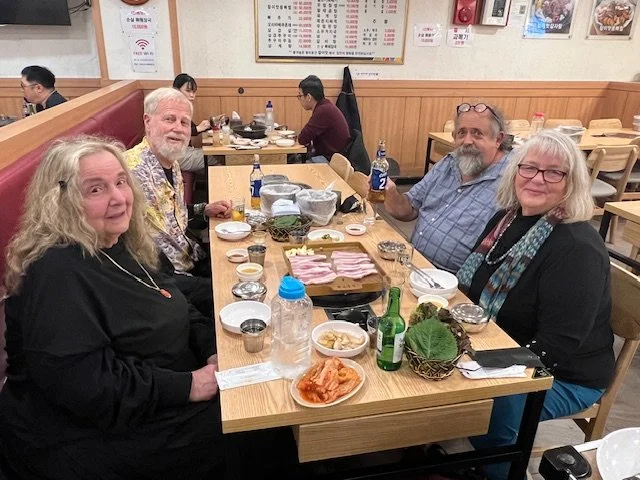
After we visited the Museum, we had dinner at a wonderful restaurant (Seocho 4 dong) next to our hotel.
Thank you for reading my blog. Part 2 will continue our stay in Seoul and our visit to Namdaemun Market. I will include recipes and some light history.